What is the 7 plus exam?
The 7 plus exam is the entrance assessment independent schools use for entry into Year 3. Children sit it in Year 2, at the age of six or seven. There is no common paper: each school writes and marks its own. The table shows the September 2027 timetable at seven well-known London schools.
| School | Registration deadline | First assessment | Offers |
|---|---|---|---|
| Westminster Under | 30 September 2026 | 15 or 16 October 2026 | 13 November 2026 |
| UCS Junior Branch | 1 October 2026 | January 2027 | Not stated |
| St Paul’s Prep | 25 September 2026 | 21 November 2026 | 4 December 2026 |
| North London Collegiate Junior | 30 October 2026 | 13 November 2026 | 22 January 2027 |
| Habs Boys’ Prep | 6 November 2026 | 20 November 2026 | 22 January 2027 |
| Highgate Junior | 4 November 2026 | 1 December 2026 | 22 January 2027 |
| South Hampstead Junior | 27 November 2026 | 5 January 2027 | End of January 2027 |
Sources: each school’s own admissions page, Westminster Under, UCS, St Paul’s, NLCS, Habs, Highgate (whose dates are marked provisional) and South Hampstead. Notice the first column. Most registrations close early in Year 2, some within weeks of the summer holiday, so a family that starts thinking in October can already have missed several schools.
What does the 7 plus exam test?
Every school in this guide tests maths and English in writing. Some add verbal and non-verbal reasoning. Most then invite a shortlist back for a second stage: a lesson, group activities, play or an interview, where teachers watch how a child thinks and gets on with others.
| School | Written tests | Other stages | Places at 7+ |
|---|---|---|---|
| Westminster Under | Maths, English, verbal and non-verbal reasoning | Callback Day for about 130 children: classroom and group activities, and an interview | About 60 |
| St Paul’s Prep | Maths, reasoning and an English dictation | Half-day group assessment: a maths lesson, an English lesson and a problem-solving task | About 72 |
| Highgate Junior | English and maths, 50 minutes each | Interview and activity day for shortlisted pupils | About 50 |
| UCS Junior Branch | English and maths, with play observed | An autumn visit with a reading assessment comes first | About 60, half from its own pre-prep |
| South Hampstead Junior | Maths, writing and comprehension | A round table discussion on the same day | About 24 |
Sources: Westminster Under’s 2027 booklet, St Paul’s entry and selection pages, Highgate, UCS and South Hampstead. Several schools also ask the child’s current school for a report or reference, and UCS says its report “plays an important part in the selection procedure”.
The second stage is not a further exam. Highgate’s admissions policy puts it plainly: “The interview is not a second academic test.” Teachers are watching for curiosity, listening and how a child copes when a task is new.
What maths is in the 7 plus exam?
7 plus maths is Key Stage 1 maths: the Year 1 and Year 2 National Curriculum, sometimes with a little of Year 3. Schools test it at the top of the range, because the papers are sat in the autumn or winter of Year 2, before the class has finished the Year 2 content.
| Topic | What the Year 2 curriculum asks |
|---|---|
| Number and place value | Read and write numbers to at least 100; the tens and ones in a two-digit number; compare with <, > and = |
| Adding and subtracting | Facts to 20 recalled fluently; two two-digit numbers in the head; missing number problems |
| Multiplying and dividing | The 2, 5 and 10 times tables and their division facts; odd and even numbers |
| Fractions | 1/3, 1/4, 2/4 and 3/4 of a shape, set or quantity; 2/4 is the same as 1/2 |
| Measurement | Money and giving change; time to five minutes; length, mass and capacity |
| Shape and statistics | Sides, edges, faces and vertices; tally charts, pictograms and block diagrams |
Source: the Department for Education, mathematics programmes of study, Key Stage 1. Its summary of the key stage is a good test of readiness: “By the end of year 2, pupils should know the number bonds to 20 and be precise in using and understanding place value.”
Where schools go beyond Year 2
St Paul’s says its paper is built on the Year 2 programme of study, then adds a warning.
“The paper may also include aspects of number and place value found in the Year 3 National Curriculum programme of study.”
The same guidance lists the 3 times table, which the curriculum places in Year 3.
North London Collegiate’s sample paper goes further still. It asks for 737 + 255 and 802 − 276 set out in columns. Written column methods for three-digit numbers are, in the curriculum’s own words, a Year 3 skill: “add and subtract numbers with up to 3 digits, using formal written methods of columnar addition and subtraction”. Our 7 plus maths tutors start by finding which of these a child has already met, then fill the gaps calmly.
How hard is 7 plus maths? Two questions compared
7 plus maths uses the same topics as a Year 2 classroom, but the questions ask for more steps and more independent thinking. The clearest way to see the gap is to put a question from the national Year 2 test beside one from a school’s 7 plus paper. Try each before reading the answer.
“Sita buys a drink that costs 65p. She pays with four 20p coins. How much change does Sita get?”
The answer is 15p. Four 20p coins make 80p, and 80p − 65p = 15p. The mark scheme gives one mark for a correct method even when the final answer is wrong, so a child who writes 20 × 4 = 80 has already earned something. Contains material developed by the Standards and Testing Agency for 2024 national curriculum assessments and licensed under the Open Government Licence v3.0.
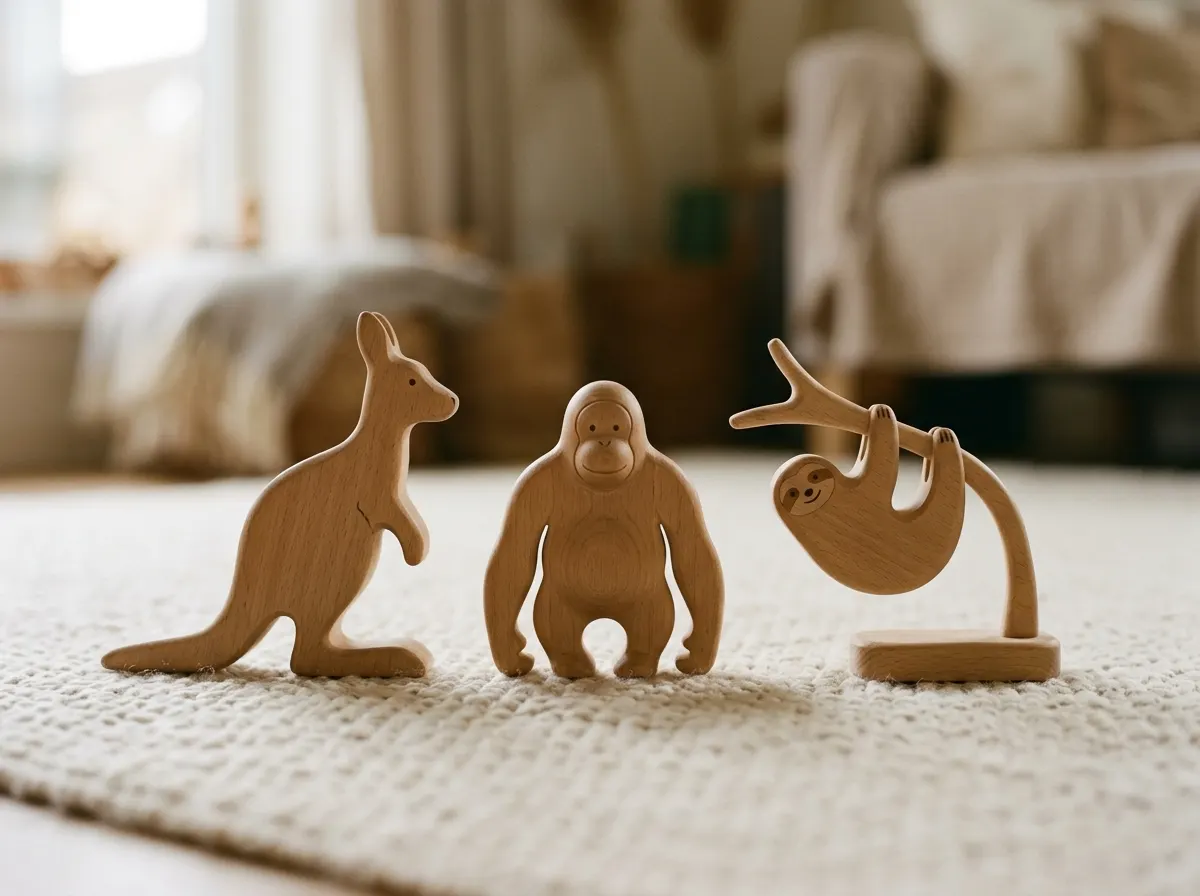
“Arshna is a zoo keeper. She weighed her three favourite animals
The Orangutan is 64kg.
The Sloth is 36kg lighter than the Orangutan.
The Kangaroo is 36kg heavier than the Orangutan.
How much do the Kangaroo and Sloth weigh altogether?”
The answer is 128kg. The step-by-step route is 64 − 36 = 28kg for the sloth, 64 + 36 = 100kg for the kangaroo, and 28 + 100 = 128kg. That is three calculations, one of them a subtraction that crosses a ten, done in the right order.
There is also a shortcut. The sloth is 36kg below the orangutan and the kangaroo is 36kg above it, so together they weigh exactly two orangutans: 64 + 64 = 128kg. A child who sees that has understood the question rather than just worked it. That is the kind of thinking Westminster Under means when it says its tests let children show “how they think, rather than simply applying rehearsed methods”.
Is there a pass mark for the 7 plus?
No. There is no published 7 plus pass mark, because there is no common paper. Each school marks its own tests, looks at the second stage and the current school’s report, and offers as many places as it has. None of the schools in this guide publishes how many children apply.
Age matters at six more than at any later entry point. A child born in September can be almost a year older than one born in August, which is almost a sixth of their life. St Paul’s says its reasoning tasks are “weighted according to age”, so a younger child is not simply compared with older ones on that paper. Ask each school how it treats age, because few say so on their websites.
“We are looking to discover what the children can do, not what they can’t do.”
Not getting a place at 7 is not the end of the road. Most of these schools have later entry points too, at 8+ or 11+, and the reasoning and problem-solving built now carries straight on into 11 plus maths.
Should a child be tutored for the 7 plus exam?
Several schools say clearly that they do not want six-year-olds drilled for the 7 plus. What they do want is a child who is secure in the Key Stage 1 basics and confident enough to try something unfamiliar. Those are different things, and the difference is the whole question.
“We do not expect children to be intensively tutored. However, it is helpful for pupils to be secure in the core skills expected by the end of Key Stage 1, and to be confident in applying these independently.”
Habs is firmer: “We strongly recommend against tutoring your child for these”, it says of its 4+ and 7+ assessments, adding that “everything they have already done and learnt will be enough to show us their potential” (Habs Boys’ admissions). Westminster’s own 7+ page recommends “that parents avoid seeking outside tuition” (Westminster Under at 7+).
Take those words seriously. Practising past-paper tricks for months will not help a child show “how they think”, and it can make a six-year-old dread maths. Where help is useful is with gaps: a child who has missed number bonds or place value, or who freezes at a word problem. Filling a gap and building confidence is not the same as hothousing.
Where can you find 7 plus maths papers?
A few schools publish free 7 plus maths sample papers, and the national Key Stage 1 tests are free from the government. Most schools publish nothing: St Paul’s says “We do not publish past papers”, and South Hampstead that “we do not provide past papers”. The table links only to official sources.
| Papers | What you get |
|---|---|
| North London Collegiate | A 7+ sample maths paper: a mental maths section, then 19 written questions |
| Highgate | Sample 7+ maths questions, with the marks for each |
| Bancroft’s Prep | 7+ sample maths questions, which the school says show the format, not the real test |
| St Paul’s Prep | Maths and English guidance describing the paper, with no questions |
| Standards and Testing Agency | The 2024 Key Stage 1 maths tests, arithmetic and reasoning, with mark schemes |
Key Stage 1 tests have been optional for schools since 2023-24, according to the government’s guidance, so your child’s school may not have used them. They are still a fair check of Year 2 basics, and usually gentler than a school’s 7 plus paper.
One more from NLCS shows how far a 7 plus paper can stretch. Try it before reading on.
“Complete these sequences … 1, 2, 4, 7, ____, ____, 22”
The missing numbers are 11 and 16. The gaps grow by one each time: add 1, add 2, add 3, add 4 to reach 11, add 5 to reach 16, and add 6 to reach 22. The 22 at the end is there to check the rule.
How should you prepare for the 7 plus exam?
Prepare for the 7 plus gently, over months rather than weeks. Register on time, make the Key Stage 1 basics secure and quick, then practise explaining answers out loud. Short daily practice does more for a six-year-old than a long weekly session. This is the plan we suggest.
| When | What to do |
|---|---|
| Spring of Year 1 | Choose schools and note their registration windows. St Paul’s opens in February of Year 1, NLCS opened on 1 May and Highgate on 20 May for 2027 entry |
| Summer of Year 1 | Number bonds to 20 and counting in 2s, 5s and 10s, through games rather than worksheets |
| September of Year 2 | Register before the deadlines. Westminster Under, St Paul’s and UCS closed between 25 September and 1 October |
| Autumn of Year 2 | Place value to 100, the 2, 5 and 10 times tables, money and time. Try a sample paper untimed, talking through each question |
| The week before | Nothing new. Early nights, and a visit to the school if it offers one |
Sources for the dates: St Paul’s, NLCS, Highgate, Westminster Under and UCS. They are for 2027 entry and move a little each year, so check every school’s page in the spring of Year 1.
What do our tutors see in 7 plus maths?
Our tutors mostly see bright six-year-olds who know more than they can show. They can add two numbers but lose their way in a three-step word problem, or know the answer but cannot yet say why. Both respond well to short, warm, regular practice.
Understanding before speed
Every one of our tutors is an Oxford or Cambridge mathematics graduate. At 7 plus that means teaching number sense properly: counters, pictures and games on screen before anything is written as a sum, so a child can cope when a question is worded in a new way.
Talking about maths
Second-stage days include lessons and group tasks led by unfamiliar adults. A child used to explaining their thinking to a friendly tutor takes that in their stride, so we practise talking about maths as much as doing it. After each lesson you get a plain note on what was covered and five minutes of practice for each day.
Every family starts with a free consultation and a free trial session, and 97% of families are happy with their first tutor match. You pay nothing until you have found a tutor you are completely happy with.
We will also tell you honestly if we think your child does not need us. If your child is in Year 1 or Year 2 and you are unsure where they stand, book a free consultation: a 20-minute call about the schools you are considering and how maths is going now.